
Level controls

Types of Level Control Systems
There are various types of level control systems, including float switches, electronic and pneumatic level controllers, and pressure sensors.
Using Float Switches
A float switch is the most common type of level control. It floats on the surface of the water and switches the pump on when the water level rises above a defined point. When the water level falls below this point again, it switches the pump off.
How Pneumatic Level Controllers Work
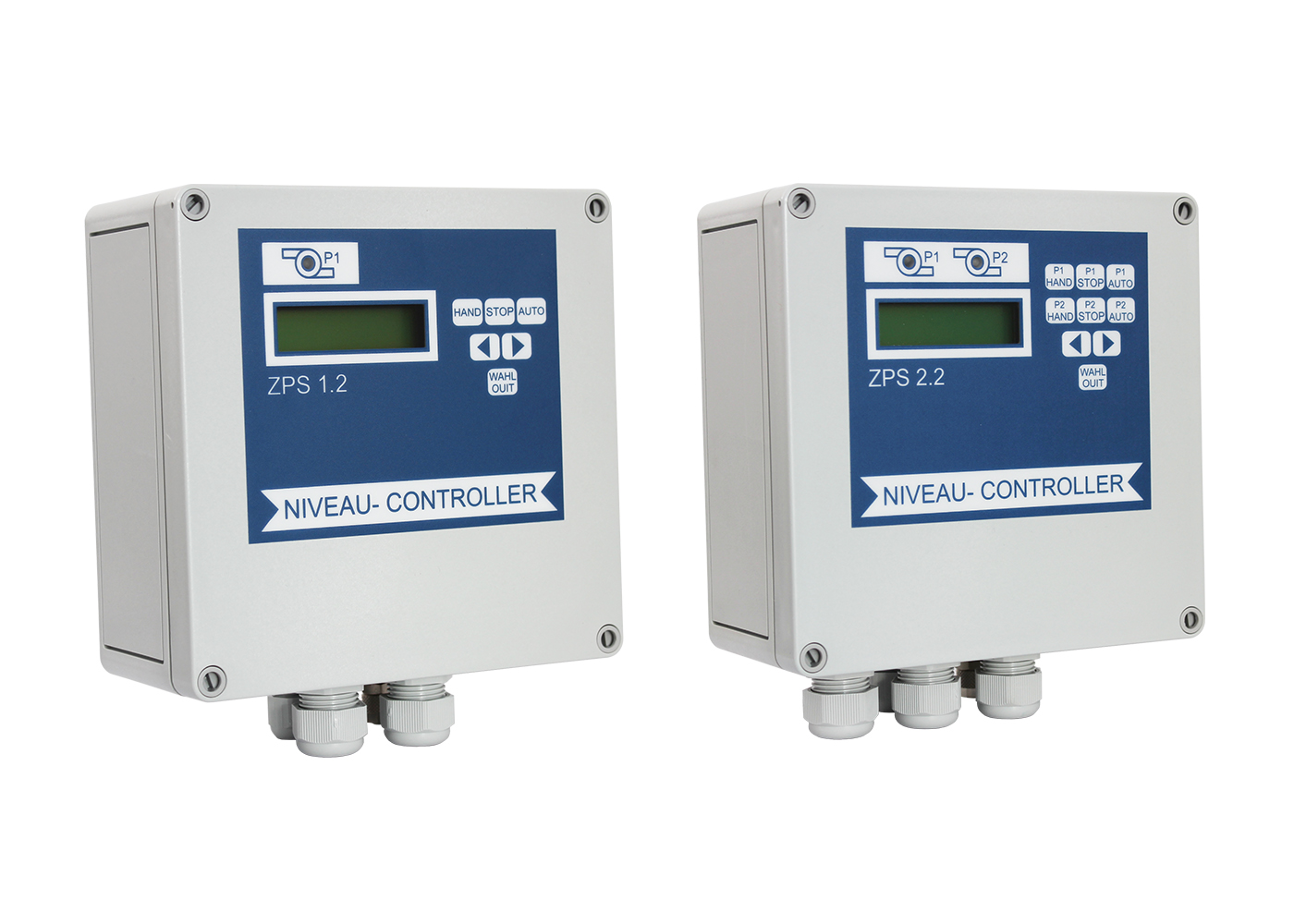
Our ZPS pneumatic level controller has been designed for use in pump systems. It is supplied as a wall-mounted control cabinet made of robust plastic. The ZPS indicates the operating status both on a plain-text display and via indicator lights. It enables the automatic operation of pumps in both three-phase and single-phase configurations.
In twin-pump systems, the ZPS alternates pump operation automatically. During peak loads, the second pump is switched on automatically. If a fault occurs, the standby pump is activated to ensure uninterrupted operation. The controller allows the pump start delay and run-on time to be programmed individually. Visual and audible fault signals are integrated, as are volt-free outputs for forwarding fault signals to external systems. Level control is carried out using the back-pressure method, float switches or a 4–20 mA interface for external sensors.
The unit also displays the operating hours, current consumption of the pumps and the maintenance interval. An integrated fault memory records the last 64 fault events, enabling faults to be identified and rectified quickly and efficiently.
How Electronic Level Controllers Work
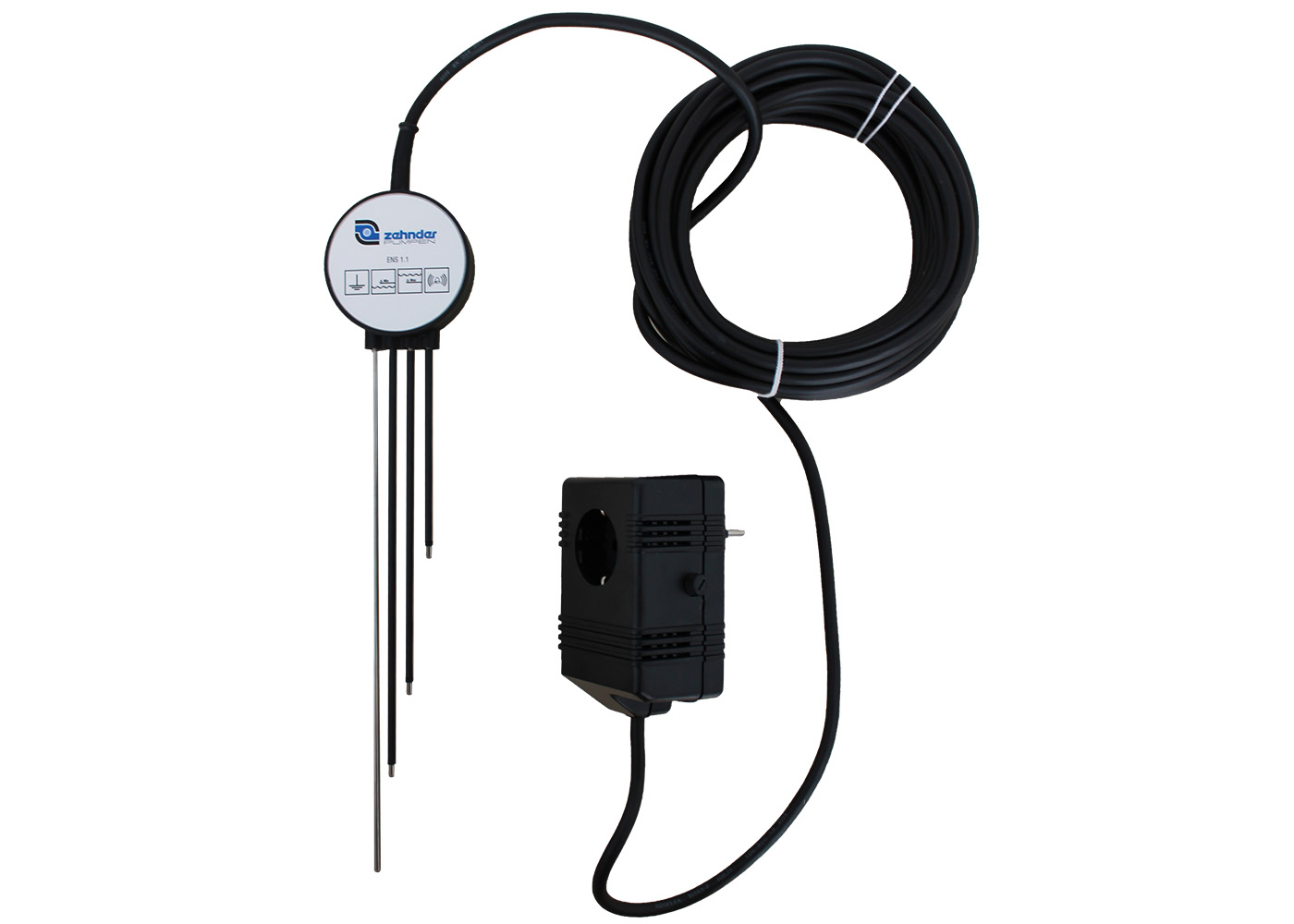
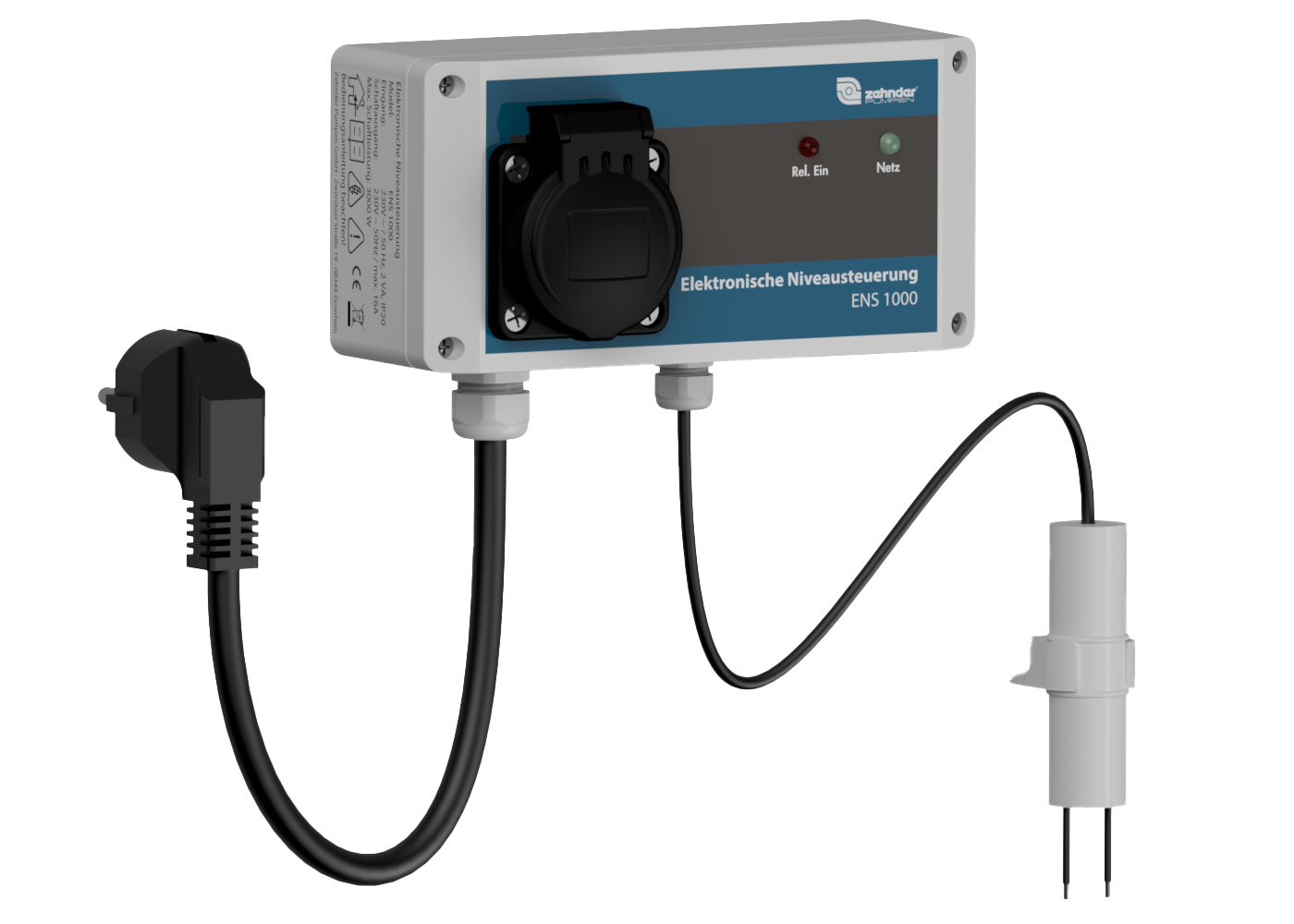
An electronic level controller continuously monitors the liquid level in a tank or pit using electrodes immersed in the liquid. This type of controller is particularly suitable for non-flammable and electrically conductive liquids.
The pump operated by the level controller starts as soon as the liquid reaches a defined level detected by the switch-on electrode. In most cases, four electrode rods are immersed in the liquid at different depths. The earth electrode remains permanently immersed in the water to provide a constant reference. As the water level rises, it first reaches the switch-on electrode, which activates the pump. When the liquid level falls again and reaches the switch-off electrode, the pump is switched off to prevent dry running.
An additional alarm electrode triggers an alarm when the liquid level exceeds a critical value. This electrode activates an audible alarm and can also initiate an external alarm via a volt-free contact. This type of level control enables precise and automatic regulation of the liquid level. It is particularly useful in applications where the liquid level must be maintained accurately or where the liquid needs to be pumped down to a very low level.
The maximum liquid temperature that can be handled with this control system is 55 °C. This ensures the proper functioning of both the electrodes and the controller.
Level Controllers for Submersible Pumps from Zehnder Pumpen, Made in Germany
Choose level controllers from Zehnder Pumpen. We offer a range of models made in Germany, as well as comprehensive expert advice to help you find the right control solution for your individual requirements. In addition to level controllers, our product range includes a variety of other control systems tailored to different applications and requirements, including variable speed controllers, pressure switches, dry-run protection and three-phase switching devices. The experts at Zehnder Pumpen will be happy to assist you in finding the optimum solution for your application.